Work and observation
During the 2026 harvest, I worked with Chiara Boschis and visited Sandrone. I am recording what I saw, what I was told, and what I still need to verify about vineyard and winery decisions.
Independent research · Piemonte, Italy · 2026
Harvest work, producer research, and comparative tasting are shaping a question I care about: how can the complexity of Barolo become useful, accurate learning for people who buy, serve, and talk about wine?
This is a work in progress. I am documenting the research and testing an educational approach. I am not presenting it as a client project or a completed wine credential.
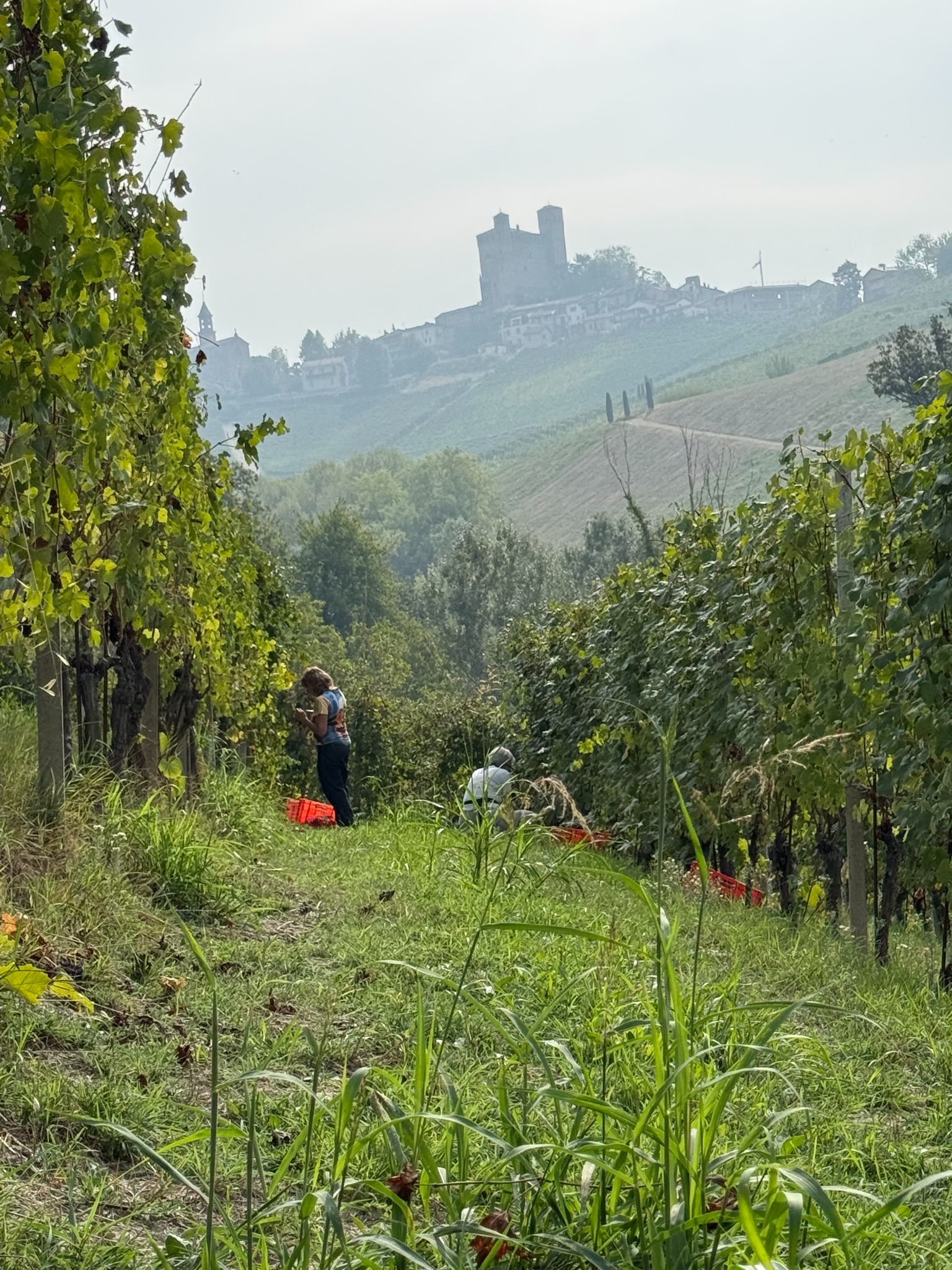 Vineyard fieldwork in Piemonte, 2026. Photo provided by Amy Flauaus.
01 / Evidence and status
Each stream supplies a different kind of evidence. Keeping them separate helps me avoid turning one tasting or conversation into a claim about an entire region.
During the 2026 harvest, I worked with Chiara Boschis and visited Sandrone. I am recording what I saw, what I was told, and what I still need to verify about vineyard and winery decisions.
I am building comparable profiles organized by commune and MGA, tracking site conditions, blending, fermentation, aging vessel, and the character of the wine. The aim is to make meaningful comparisons, not rank producers.
I am mapping women-owned and women-led wineries and documenting actual roles in viticulture, winemaking, commercial strategy, and family leadership before drawing conclusions about the landscape.
02 / Research framework
A useful comparison keeps the variables visible. These are the categories in my working research structure, with the question each category is meant to answer.
| Dimension | What I record | Why it matters |
|---|---|---|
| Place | Commune, MGA, elevation, exposure, geology, and mesoclimate where sources allow. | Grounds a tasting claim in a specific site rather than a broad regional stereotype. |
| Composition | Single-site wine or blend, including vineyard sources when disclosed. | Prevents a blended bottling from being treated as an expression of one MGA. |
| Production | Fermentation and extraction approach, vessel, and aging details when documented. | Keeps producer choices in view alongside growing conditions. |
| People and business | Leadership roles, production scale, audience, and how the producer explains its own work. | Connects the wine to decisions, communication, and market position. |
| Tasting context | Vintage, bottle age, service conditions, and my observations, distinguished from published claims. | Makes comparisons more honest and useful for teaching. |
Sources, interpretations, and open questions are tracked separately in the working notes. Individual producer profiles are still being developed.
03 / Field note
In a side-by-side tasting of young wines from La Morra and Serralunga d’Alba, I expected the differences in place to be easy to name. The strong tannic sensation made it harder to separate fruit, structure, and site than I expected.
That experience changed the learning question. Instead of asking a beginner to identify a commune by taste, I would start with bottle age, a structured comparison, and a few testable hypotheses about place and production. The learner should be able to say what the evidence supports—and what it cannot establish from one tasting.
04 / Emerging application
I am exploring a concise Piemonte learning resource for hospitality or trade teams, built around producer records, comparative tasting, and better questions to ask about a bottle.
The research and educational concept are ongoing. No commercial product or client outcome is claimed here.
Continue exploring
The same research and problem-solving method runs through my work in product strategy, learning programs, and operations.